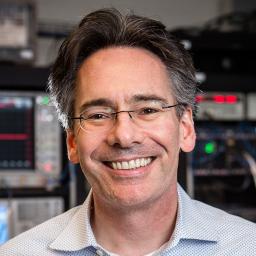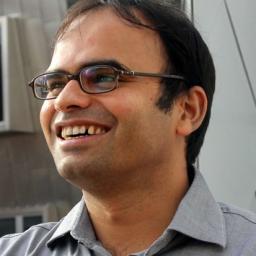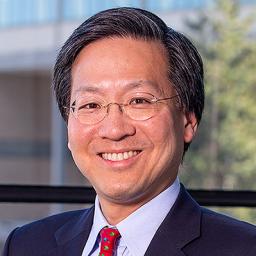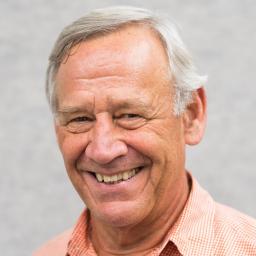

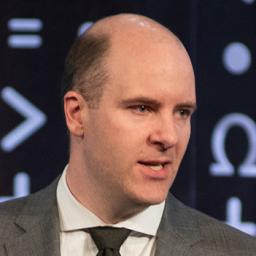




John Hart
Class of 1922 Professor
Department Head, Mechanical Engineering
Massachusetts Institute of Technology
John Hart pic

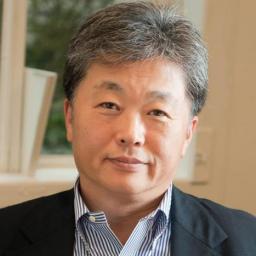
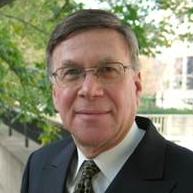
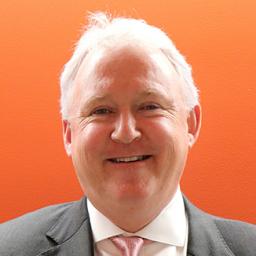
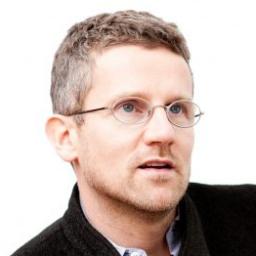
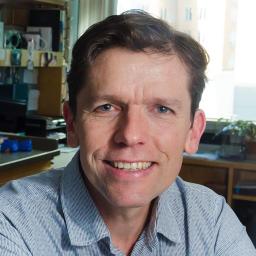
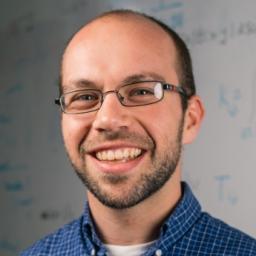
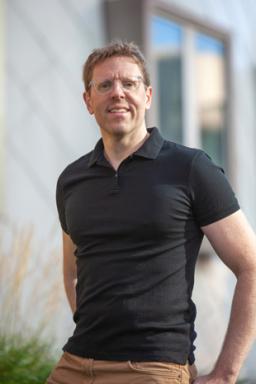
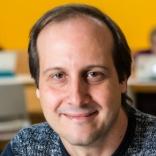
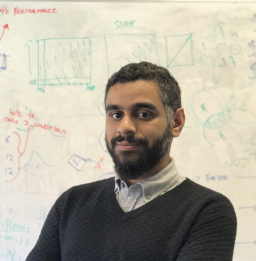
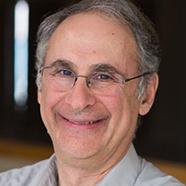
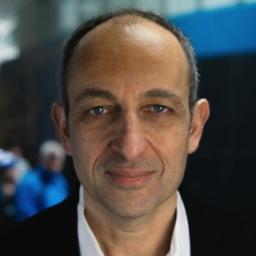
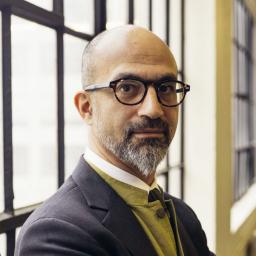
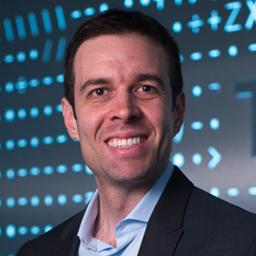
John Hart is the Class of 1922 Professor and Head of the Department of Mechanical Engineering at MIT. He is also a faculty Co-Director of the MIT Initiative for New Manufacturing, and Director of the MIT Center for Advanced Production Technologies. John’s research focuses on manufacturing processes, machine design, and integration of computing and automation in production systems. John is a co-founder/advisor of several startup companies including VulcanForms, Upgrade Manufacturing, Desktop Metal, and Fabri. He is also a Board Member of Carpenter Technology Corporation. LinkedIn: https://www.linkedin.com/in/ajhart/

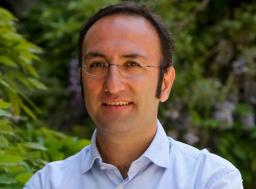
Eren İnci
Professor of Economics
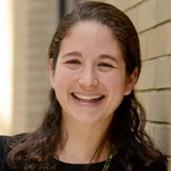
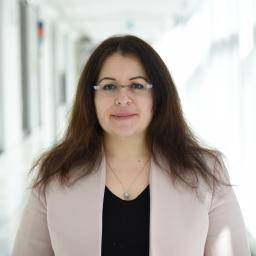
Eren Inci

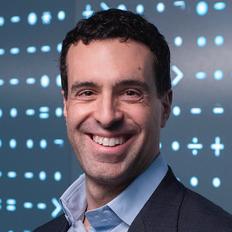
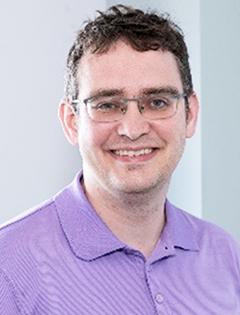
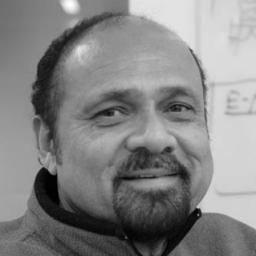
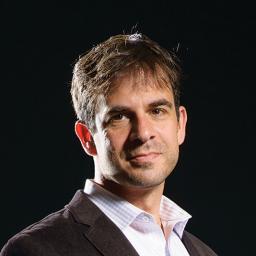
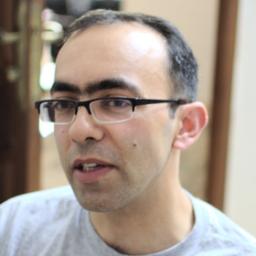
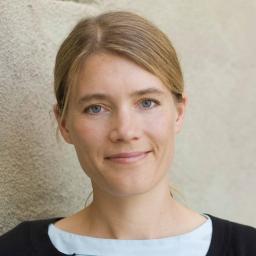
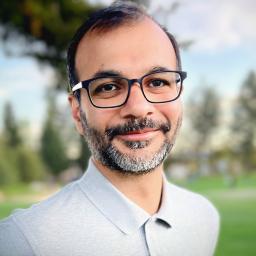
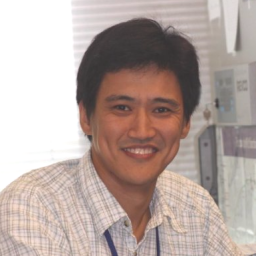
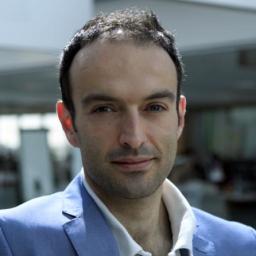
Eren İnci is a Professor of Economics at Sabancı University. He received his BSc in Management Engineering from Istanbul Technical University in 2002, his MA in Economics from Boston College in 2004, and his PhD in Economics from Boston College in 2007. His research lies at the intersection of urban economics and transportation economics, with a particular focus on the economics of parking, traffic congestion, and urban mobility. His work examines how parking policies, pricing mechanisms, and transportation systems shape the livability, efficiency, and sustainability of cities. He has published widely on urban parking policy and has contributed to the development of parking economics as an interdisciplinary research area. In 2014, he received both the TÜBA-GEBİP Outstanding Young Scientist Award from the Turkish Academy of Sciences and the BAGEP Young Scientist Award from the Science Academy. In 2018, he was awarded the TÜBİTAK Incentive Award. He served as Vice Dean of the Faculty of Arts and Social Sciences at Sabancı University from 2017 to 2024 and was a member of the Executive Committee of the International Transportation Economics Association from 2016 to 2024. He is currently a Research Affiliate at the Intelligent Transportation Systems Lab at the Massachusetts Institute of Technology and a researcher at the Smart Mobility and Logistics Lab at Sabancı University. He has also held visiting positions at the Center for European Economic Research, the University of California, Riverside, the University of British Columbia, and Massachusetts Institute of Technology.

David Martinez
Laboratory Fellow Cyber Security and Information Sciences Division, MIT Lincoln Laboratory
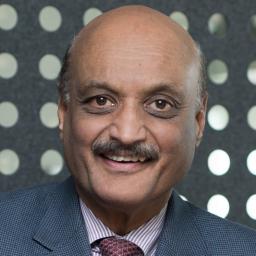
David Martinez

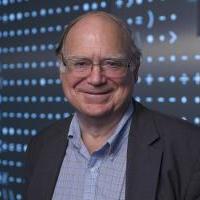
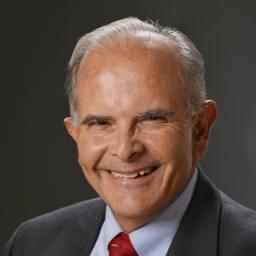
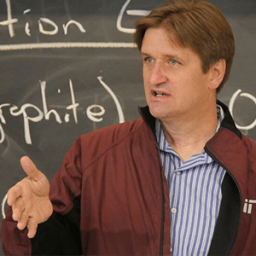
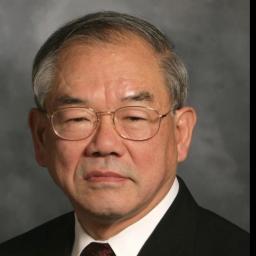
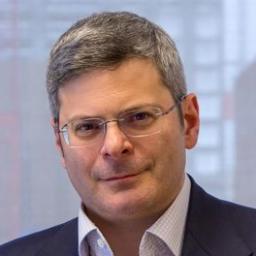
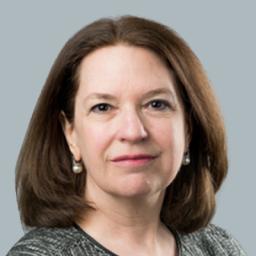
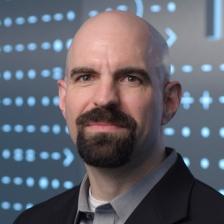
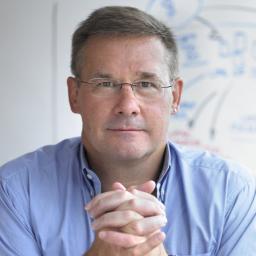
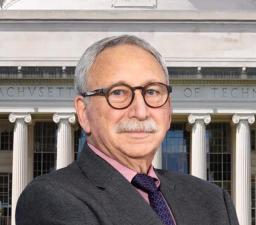
David Martinez is a Laboratory Fellow in the Cyber Security and Information Sciences Division at MIT Lincoln Laboratory and MIT Instructor. He focuses on research and technical directions in the areas of artificial intelligence (AI) and high-performance computing. Previously, Mr. Martinez served as an Associate Head in the Cyber Security and Information Sciences Division. He was also a member of Lincoln Laboratory’s Steering Committee. 

Mr. Martinez has held many past technical leadership roles, including Leader of the Embedded Digital Systems Group and Head of the ISR Systems and Technology Division. Mr. Martinez also served in a leadership role as President and Chairman of Mercury Federal Systems. Prior to joining Lincoln Laboratory, he was employed as a principal research engineer at ARCO Oil and Gas Company, specializing in adaptive seismic signal processing. He received the ARCO special achievement award. He holds three U.S. patents based on his work in signal processing for seismic applications. He was elected an IEEE Fellow “for technical leadership in the development of high-performance embedded computing for real-time defense systems.” 

In 2008, he and his co-authors released a successful book titled High Performance Embedded Computing Handbook, which is highly referenced within the embedded computing research community. Recently, Mr. Martinez co-authored the book Artificial Intelligence: A Systems Approach from Architecture Principles to Deployment. This book is used in his MIT course called “AI System Architecture and Large Language Model Applications.”

Mr. Martinez was awarded a bachelor’s degree from New Mexico State University, an MS degree from MIT, and the EE degree jointly from MIT and the Woods Hole Oceanographic Institution in Electrical Engineering and Oceanographic Engineering. He completed an MBA from the Southern Methodist University.

Scott Moura
Professor of Civil & Environmental Engineering
Scott Moura

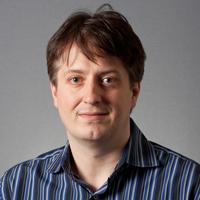
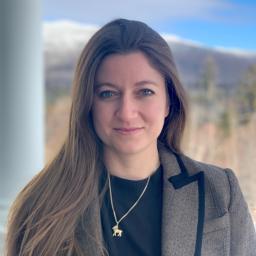
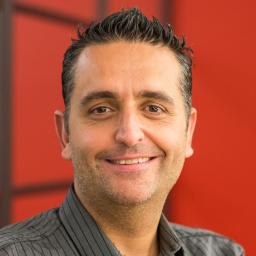
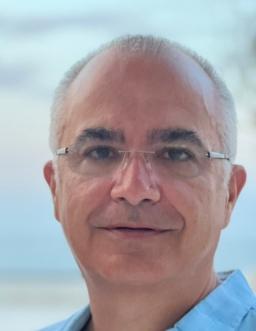
Scott Moura is a Professor in Civil & Environmental Engineering, Director of the Energy, Controls, & Applications Lab (eCAL), and Berkeley ITS Acting Faculty Director at the University of California, Berkeley. He recently held the roles of PATH Faculty Director, and Chair of Engineering Science. He received the B.S. degree from the University of California, Berkeley, CA, USA, and the M.S. and Ph.D. degrees from the University of Michigan, Ann Arbor, in 2006, 2008, and 2011, respectively, all in mechanical engineering. From 2011 to 2013, he was a Post-Doctoral Fellow at the Cymer Center for Control Systems and DynamicsUniversity of California, San Diego and a Visiting Researcher at the Centre Automatique et SystèmesMINES ParisTech, Paris, France in 2013. His research interests include control, optimization, and AI for batteries, electrified vehicles, and distributed energy resources.
 

Markos Papageorgiou
Emeritus Professor

Markos Papageorgiou received the Diplom-Ingenieur and Doktor-Ingenieur (honors) degrees in Electrical Engineering from the Technical University of Munich, Germany, in 1976 and 1981, respectively. He was a Free Associate with Dorsch Consult, Munich (1982-1988), and with Institute National de Recherche sur les Transports et leur Sécurité (INRETS), Paris, France (1986-1997). From 1988 to 1994 he was a (tenured) Professor of Automation at the Technical University of Munich. Since 1994 he has been a Professor (since 2021 Professor Emeritus) at the Technical University of Crete, Chania, Greece. Since 2021 he has been a Professor at Ningbo University, China. He was a Visiting Professor at the Politecnico di Milano, Italy (1982), at the Ecole Nationale des Ponts et Chaussées, Paris (1985-1987), at MIT, Boston (1997, 2000); at University of Rome La Sapienza, Italy (2018); Distinguished Visiting Professor at Tsinghua University, China (2018-2021); and a Visiting Scholar at the University of California, Berkeley (1993, 1997, 2001, 2011) and other universities. Dr. Papageorgiou is author or editor of 7 books and of some 600 technical papers. His research interests include automatic control and optimisation theory and applications to traffic and transportation systems, water systems and further areas. He was the Editor-in-Chief of Transportation Research – Part C (2005-2012). He also served as an Associate Editor of IEEE Control Systems Society – Conference Editorial Board, of IEEE Transactions on Intelligent Transportation Systems and other journals. He is a Life Fellow of IEEE and a Fellow of IFAC. He received a DAAD scholarship (1971-1976), the 1983 Eugen-Hartmann award from the Union of German Engineers (VDI), and a Fulbright Lecturing/Research Award (1997). He was a recipient of the IEEE Intelligent Transportation Systems Society Outstanding Research Award (2007) and Outstanding Application Award (2018); and recipient of the IEEE Control Systems Society Transition to Practice Award (2010). He is the recipient of the 2020 IEEE Transportation Technologies Award. He was presented the titles of Honorary Visiting Professor by the University of Belgrade, Serbia (2010); TUM Ambassador by the Technical University of Munich (2021); and Doctor honoris causa by the Aristotle University of Thessaloniki (2023). The Dynamic Systems and Simulation Laboratory he was heading, received the IEEE Intelligent Transportation Systems Society Institutional Lead Award (2011). He was awarded two ERC Advanced Investigator Grants (2013-2018 and 2019-2025)
Mark Roberts
Executive Director of the Real Estate Center at the UT McCombs School of Business

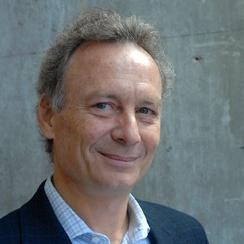
Mark G. Roberts, CFA, AIA currently serves as the Executive Director of the Real Estate Center at the UT McCombs School of Business and has over 30 years of commercial real estate experience. Prior to this, he served as a Managing Director at DWS and held several senior leadership positions including Head of Research & Strategy, Alternatives and Real Assets, Head of U.S. Multi-asset & Solutions and Co-Head of Research for DWS. He led the research teams that support the firm’s global real estate investment process which also included developing the firm’s ESG strategy. He also led the portfolio management team responsible for over $2 billion in multi-asset strategies. From 1995 until joining DWS in June 2011, he served as Global Head of Research of Invesco Real Estate. From 2003 to June 2011, Mr. Roberts was Chairman of the firm’s investment strategy group and also served as a member of various Executive and Investment Committees. Prior to joining Invesco Real Estate in 1995, Mr. Roberts previously served as an architect and also Director of Construction/Development for Club Corp International Inc., a global hospitality company. He has also served as the Chairman of the Board of NCREIF and was the former President of RERI, and a member of the NCREIF Fund - Index Subcommittee which developed the NFI - ODCE Index. He currently serves on the Leadership Committee of the Global Real Estate Fund Index (a consortium which includes NCREIF, Inrev- Europe and Anrev - APAC) and also serves on the PREA Research Committee. Mr. Roberts holds an M.S. in Real Estate Development from the Massachusetts Institute of Technology, a B.A. in Architecture from the University of Illinois at Urbana. He is a Fellow of both the Real Estate Research Institute and the Homer Hoyt Institute.

Noelle Selin
Professor in the Institute for Data, Systems and Society (IDSS) and the Department of Earth, Atmospheric and Planetary Sciences (EAPS)

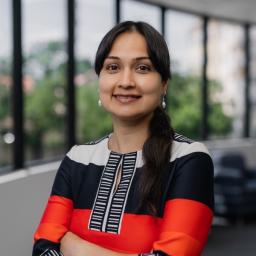
Noelle E. Selin is Professor in the Institute for Data, Systems and Society (IDSS) and the Department of Earth, Atmospheric and Planetary Sciences (EAPS). She served as director of MIT’s Technology and Policy Program from 2018-2023, and as Interim Director of IDSS from 2023-2024. Her research uses modeling and analysis to inform sustainability decision-making, focusing on issues involving air pollution, climate change, and hazardous substances such as mercury.