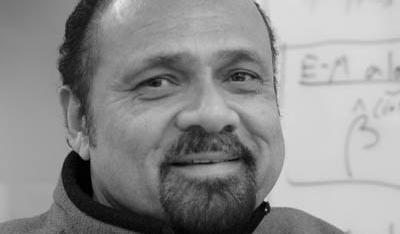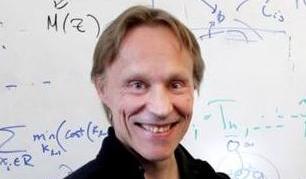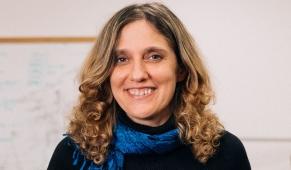
Tommi Jaakkola is a Thomas Siebel Professor of Electrical Engineering and Computer Science and the Institute for Data, Systems, and Society. He is also a member of the Computer Science and Artificial Intelligence Laboratory. His work pertains to inferential, algorithmic and estimation questions in machine learning, including large scale probabilistic distributed inference, deep learning, and causal inference.

See full profile

Regina Barzilay is a School of Engineering Distinguished Professor for AI and Health in the Department of Electrical Engineering and Computer Science and a member of the Computer Science and Artificial Intelligence Laboratory at the Massachusetts Institute of Technology.

See full profile
Examine how the latest tools, techniques, and algorithms driving modern and predictive analysis can be applied to produce powerful results, even when using unstructured data. In this highly interactive course, you’ll gain insights into what kinds of problems these methods can and cannot solve, how they can be applied effectively, and what issues are likely to arise in practical applications, particularly in the healthcare field.
Autonomous robots. Self-driving cars. Smart refrigerators. Now embedded in countless applications, deep learning provides unparalleled accuracy relative to previous AI approaches. Yet, cutting through computational complexity and developing custom hardware to support deep learning can prove challenging for many enterprises—and the cost of getting it wrong can be catastrophic. Do you have the advanced knowledge you need to keep pace in the deep learning revolution? Over the past eight years, the amount of computing required to run these neural nets has increased over a hundred thousand times, which has become a significant challenge. Gain a deeper understanding of key design considerations for deep learning systems deployed in your hardware.

Vivienne Sze is an associate professor in MIT’s Department of Electrical Engineering and Computer Science and leads the Research Lab of Electronics’ Energy-Efficient Multimedia Systems research group. Her group works on computing systems that enable energy-efficient machine learning, computer vision, and video compression/processing for a wide range of applications, including autonomous navigation, digital health, and the internet of things.

See full profile