



Improve workplace performance and achieve group objectives through people analytics—the process of using behavioral data to understand and manage organizations. Under the instruction of two of the field’s pioneering experts, you’ll learn how to use your company’s data to increase the speed and quality of your decision-making, identify organizational problems, analyze behavioral metrics, and enhance company outcomes.
Acquire the fundamental machine learning expertise you need to immediately implement new strategies for driving value in your organization. This foundational course covers essential concepts and methods in machine learning, providing the basic building blocks required to solve real tasks. You’ll also gain a deeper understanding of the strengths and weaknesses of learning algorithms, and assess which types of methods are likely to be useful for a given class of problems.
Anticipate where your industry is headed—and secure a competitive advantage—by mastering the latest discrete choice models and techniques. In this five-day course, you’ll work with leading MIT experts to discover how to apply discrete choice techniques; analyze challenges related to data collection, model formulation, estimation, testing, and forecasting; and assess online applications that drive optimization and personalization of results.
In this program, you’ll work closely with industry and government professionals across a range of disciplines to explore innovative urban design solutions—and enhance your ability to integrate the latest sensor and actuator architecture and other cutting-edge technologies into the built environment.
Explore innovative strategies for constructing and executing experiments—including factorial and fractional factorial designs—that can be applied across the physical, chemical, biological, medical, social, psychological, economic, engineering, and industrial sciences. Over the course of five days, you’ll enhance your ability to conduct cost-effective, efficient experiments, and analyze the data that they yield in order to derive maximal value for your organization.
Acquire the skills you need to build advanced computer vision applications featuring innovative developments in neural network research. Designed for engineers, scientists, and professionals in healthcare, government, retail, media, security, and automotive manufacturing, this immersive course explores the cutting edge of technological research in a field that is poised to transform the world—and offers the strategies you need to capitalize on the latest advancements.
Enhance your knowledge of the quantitative and computational realms of data science through the lens of regression analysis. Over the course of five days, you’ll learn to maximize the power of your advanced computing methods and identify strategies for fitting your data to models. Alongside global peers, you’ll gain a deeper understanding of the underlying mathematical models that form the basis of data science—and learn which models work best in different circumstances.
Transform your organization's engineering capabilities with comprehensive AI implementation spanning the complete design-to-deployment pipeline, from LLM-driven parametric design through advanced manufacturing optimization, computer vision quality control, and real-world deployment strategies. In this intensive hands-on course, you'll join accomplished global peers to master deployable AI workflows, create neural surrogates for expensive simulations, implement MLOps practices with regulatory compliance, and build complete integrated systems using open-source tools – leaving with working template libraries and custom components ready for immediate organizational deployment.
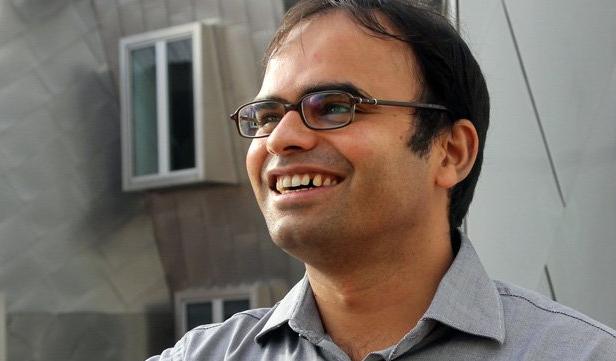
Devavrat Shah
Lead Instructor
Devavrat Shah is a professor with the department of electrical engineering and computer science, MIT. He is a member of the Laboratory for Information and Decision Systems (LIDS) and Operations Research Center (ORC), and the Director of the Statistics and Data Science Center (SDSC) in IDSS. His research focus is on theory of large complex networks, which includes network algorithms, stochastic networks, network information theory and large-scale statistical inference.

Carlo Ratti is a Professor of Urban Technologies and Planning Director of the MIT SENSEable City Lab. In the last decade, Carlo has given talks around the world on the theme of Smart Cities, while his work has been exhibited in international venues including the Venice Biennale, New York’s MoMA, London’s Science Museum and Barcelona’s Design Museum.