



Examine how the latest tools, techniques, and algorithms driving modern and predictive analysis can be applied to produce powerful results, even when using unstructured data. In this highly interactive course, you’ll gain insights into what kinds of problems these methods can and cannot solve, how they can be applied effectively, and what issues are likely to arise in practical applications, particularly in the healthcare field.

Dick Larson
Prof. Larson is Mitsui Professor in the MIT Institute for Data, Systems, and Society. He is author, co-author, or editor of six books and author of over 85 articles, primarily in the fields of urban service systems (especially emergency response systems), queueing, logistics, disaster management, disease dynamics, dynamic pricing of critical infrastructures, education, and workforce planning.

Dr. Steve Goldman
Dr. Goldman is an internationally recognized expert in Business Continuity, Crisis Management, Disaster Recovery, and Crisis Communications. A Fortune 500 Company's former Global Business Continuity Program Manager, Dr. Goldman has over 30 years hands-on experience in all aspects of these disciplines.
This year, MIT’s Enterprise Additive Manufacturing course coincides with RAPID + TCT, North America’s largest additive manufacturing and industrial 3D printing event, taking place April 13-17, 2026 in Boston, MA. The course will combine regular lecture and workshop programming with an integrated experience at RAPID, broadening exposure to key stakeholders in the AM industry and the latest technologies and applications. This 5-day program includes 3.5 full days at MIT, with two half-days split between MIT and the RAPID exposition floor.
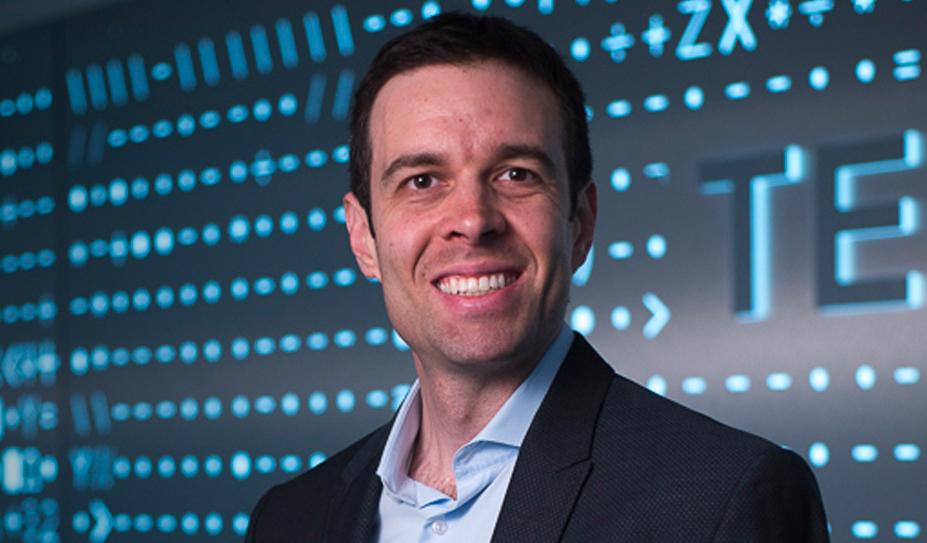
John Hart
John Hart is the Class of 1922 Professor and Head of the Department of Mechanical Engineering at MIT. He is also a faculty Co-Director of the MIT Initiative for New Manufacturing, and Director of the MIT Center for Advanced Production Technologies. John’s research focuses on manufacturing processes, machine design, and integration of computing and automation in production systems. John is a co-founder/advisor of several startup companies including VulcanForms, Upgrade Manufacturing, Desktop Metal, and Fabri. He is also a Board Member of Carpenter Technology Corporation. LinkedIn: https://www.linkedin.com/in/ajhart/
In this next-level follow-up to our Crisis Management & Business Resiliency Program, we deep dive into issues you and your industry peers chose. Topics are unique to each year’s course, as selected by previous years’ attendees of the CM&BR Program. Participants will acquire knowledge and insights from leading industry topical experts as well as your course colleagues. We can also discuss your own pressing organizational, program, management and resiliency challenges privately or in class.
Student Projects: Individual teams of students will select industry issues or specific problems/processes for study. These Projects require students to work together in small groups during the week and present their results to the Class at the end of the course. Following the Course, if interested, a Team’s Student Project can result in a published article and/or conference presentation.
Autonomous robots. Self-driving cars. Smart refrigerators. Now embedded in countless applications, deep learning provides unparalleled accuracy relative to previous AI approaches. Yet, cutting through computational complexity and developing custom hardware to support deep learning can prove challenging for many enterprises—and the cost of getting it wrong can be catastrophic. Do you have the advanced knowledge you need to keep pace in the deep learning revolution?
Over the past eight years, the amount of computing required to run these neural nets has increased over a hundred thousand times, which has become a significant challenge. Gain a deeper understanding of key design considerations for deep learning systems deployed in your hardware.
Vivienne Sze
Lead Instructor
Vivienne Sze is an associate professor in MIT’s Department of Electrical Engineering and Computer Science and leads the Research Lab of Electronics’ Energy-Efficient Multimedia Systems research group. Her group works on computing systems that enable energy-efficient machine learning, computer vision, and video compression/processing for a wide range of applications, including autonomous navigation, digital health, and the internet of things.