



What would Artificial General Intelligence look like if its first breakthrough were not in language, but in the invention of matter? Join the frontier of superintelligence applied to agentic materials discovery. In this condensed four-day course, you will move beyond static design to master autonomous AI workflows. Through hands-on clinics, you will build multi-agent systems that do not merely predict material properties, but reason, plan, and invent next-generation smart materials - integrating large-scale computational modeling with generative AI to solve complex engineering challenges across scales, from atoms to systems, from concept to physical realization.
This course introduces the modeling and mathematical foundations of modern AI. Starting from essential refreshers in calculus and linear algebra, we build toward the core structures underlying today’s supervised, unsupervised, and generative models. Case studies develop skill in translating real-world problems into the abstract language of modern AI pipelines.
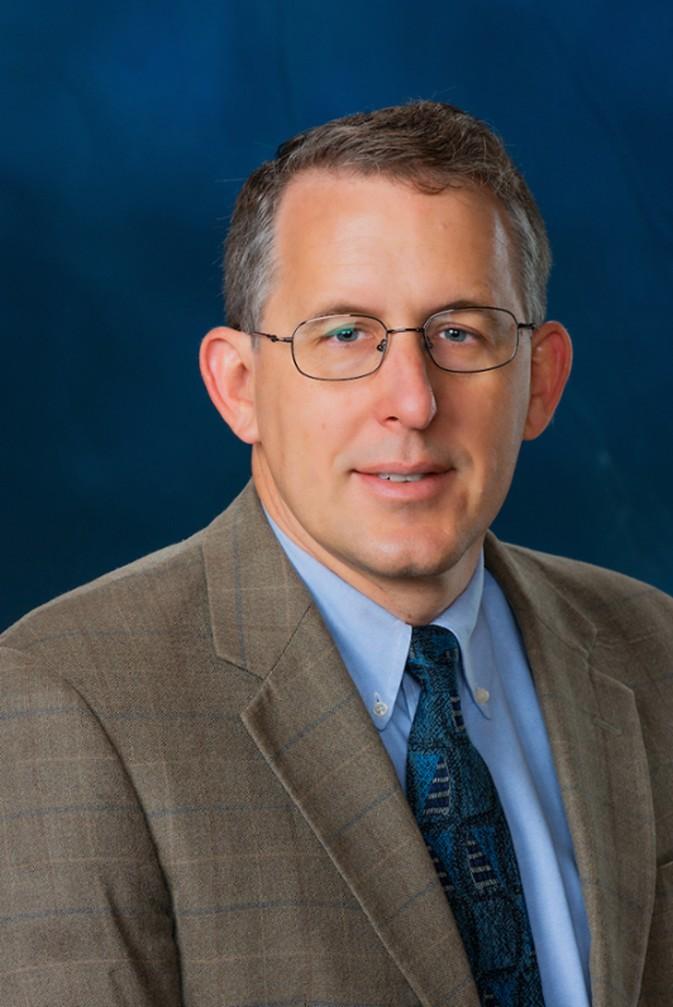
Since 2004, Rob Jackson has served a Professor in the Department of Mechanical Engineering at Auburn University. He earned his B.S., M.S., and Ph.D. degrees in Mechanical Engineering from the Georgia Institute of Technology. His research focuses on tribology, contact mechanics, electrified contacts, and lubricated bearings—critical areas for advancing mechanical systems and energy efficiency, particularly in electric vehicles (EVs). Professor Jackson directs Auburn’s Tribology Program and created one of the first undergraduate minors in tribology in 2012.
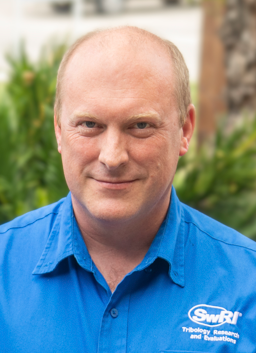
Peter Lee, Ph.D. is an Institute Engineer and the Chief Tribologist at Southwest Research Institute (SwRI), an Adjunct Professor at Texas A&M, and summer lecturer at the University of California Merced. Peter Lee received a B.Eng in Automotive Engineering and a Ph.D. in Engine Tribology from the University of Leeds, UK. Prior to attending University, Peter worked as a qualified motor vehicle technician repairing both light and heavy-duty vehicles as well as various motorsport activities on the side.
Ready to revolutionize transportation systems and discover how disruptive innovations are reshaping the mobility sector? In this immersive five-day course, you will learn to analyze and optimize transportation systems using the latest research from MIT and beyond, delving into demand and network modelling, artificial intelligence, simulation, optimization and control. These methods are explored alongside selected future solutions, with a focus on user-centric new smart mobility services , automated and AI-driven vehicles and alternative energy vectors for decarbonizing transportation. Through real-world case studies, professionals from transport service providers, urban and mobility planning, automotive, and transportation sectors can gain actionable insights to address current and future transportation challenges.
Anticipate where your industry is headed—and secure a competitive advantage—by mastering the latest discrete choice models and techniques. In this five-day course, you’ll work with leading MIT experts to discover how to apply discrete choice techniques; analyze challenges related to data collection, model formulation, estimation, testing, and forecasting; and assess online applications that drive optimization and personalization of results.
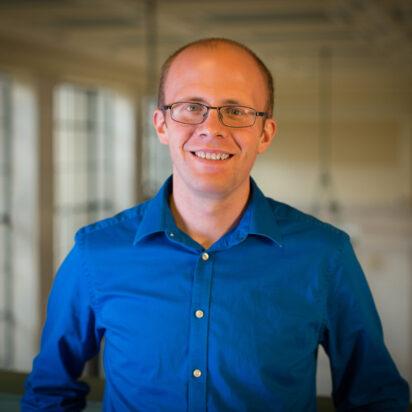
Michael obtained an A.B. in Chemical and Physical Biology at Harvard University in 2008. He then moved to Stanford University, where he completed his Ph.D. in Immunology in 2014. At Stanford, he worked in Professor K. Christopher Garcia’s laboratory, studying the molecular mechanisms of T cell receptor recognition, cross-reactivity, and activation. He then conducted postdoctoral research in Professor Carla Shatz’s laboratory, studying novel roles for immune receptors expressed by neurons in neural development and neurodegenerative disease. Michael joined the Department of Biological Engineering in 2016 as an Assistant Professor.
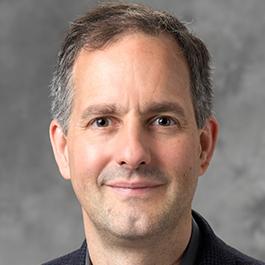
Dan Cziczo is Professor in the Department of Earth, Atmospheric and Planetary Sciences (EAPS) and the School of Aeronautics and Astronautics at Purdue University. He is an atmospheric scientist interested in the interrelationship of particulate matter and cloud formation. His research utilizes laboratory and field studies to elucidate how small particles interact with water vapor to form droplets and ice crystals which are important players in the Earth’s climate system.
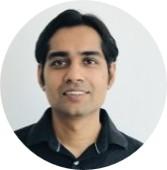
Ravi Seshadri is an Associate Professor in the Transport Division of the Department of Technology, Management and Economics at the Technical University of Denmark (DTU). His research centers on the design and evaluation of mobility solutions that promote equity, efficiency, and sustainability in transportation systems.
He specializes in the use of fiscal and economic instruments—such as tradable permits, congestion pricing, and incentive schemes—for managing transportation networks. His work also explores emerging mobility modes and services, including demand-responsive transit and shared mobility.
Ravi develops and applies advanced modeling methods, ranging from static and dynamic network equilibria to real-time traffic assignment and agent-based simulation frameworks.
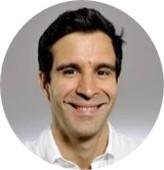
Carlos Lima Azevedo is an Associate Professor in the Department of Management Engineering at the Technical University of Denmark (DTU). His research focuses on mathematical modeling and simulation of human mobility, smart mobility services, and the development and evaluation of emerging transportation technologies.
He is also a Research Affiliate at the ITS Lab at the Massachusetts Institute of Technology (MIT). Prior to joining DTU, he was a Research Scientist at MIT and served as Executive Director of the Transportation Education Committee. His early career includes roles as a research scholar at LNEC (Portugal) and Senior Postdoctoral Associate at SMART (Singapore).