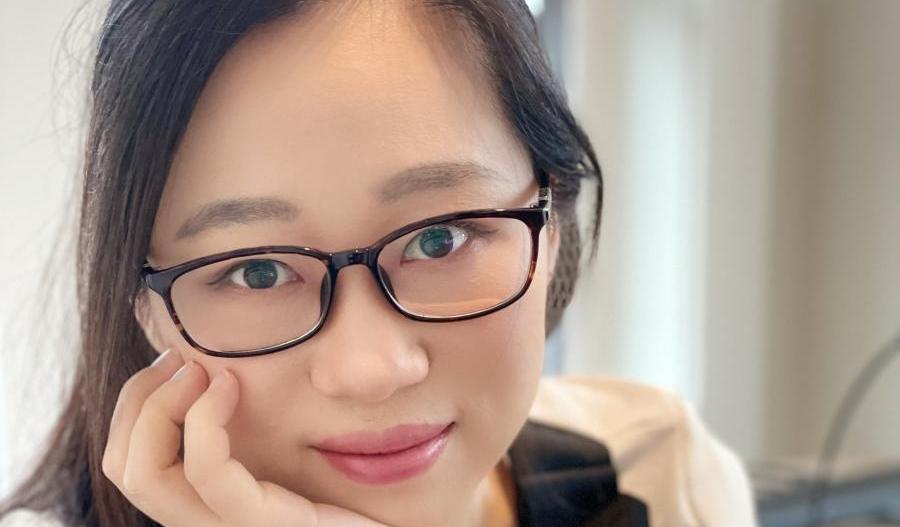
Steve Weikal is a lecturer, researcher, and Industry Chair of the Center’s Real Estate Technology Hub, which explores innovative new technologies and business models that are reinventing traditional ways of developing, transacting and managing real estate. He is also the Managing Partner of MET Fund II, which invests in early-stage startups that have an MIT connection and focus on solutions for the coming built environment transformation. 

See full profile

James Robert Scott is a lecturer and research scientist of the Real Estate Technology Hub at MIT’s Center for Real Estate, with a primary focus on real estate automation and technology. He works with stakeholders across the Proptech sector to identify technologies that will make buildings more energy efficient, more competitive, and better for the end user. 

See full profile
Artificial intelligence (AI) is a powerful tool—but without the right system-wide architecture in place to support your initiatives, your organization is leaving value on the table. Featuring interactive exercises, industry speakers, and a hands-on group project, this dynamic five-day course is designed to equip you with the skills and strategies you need to deploy an AI systems engineering approach that maximizes the value of your digital products and services.
Property technology—or “proptech”—is revolutionizing the global real estate industry. In this high-impact one-day course, you’ll dive into today’s dynamic proptech ecosystem and explore the technologies—from machine learning to data analytics tools—that are transforming the way real estate professionals buy, rent, sell, manage, construct, and design properties.
Gain a core understanding of the management approaches of the future. In this high-impact three-day course, featuring lectures, group exercises, and discussions, you’ll master specialized skills in people analytics, management, and ethics—and emerge ready to lead with impact across your enterprise.

Andrew Lawrie is an analyst studying geometric PDEs. His research focuses on the asymptotic dynamics of solutions to various geometric dispersive equations. These equations often arise as models in mathematical physics, and their study brings together techniques from harmonic analysis, nonlinear analysis, and geometry.

See full profile
Take a deep dive into the mathematical foundations of AI and machine learning. You’ll explore the math behind not only fundamental models and algorithms, but also recent innovations such as Transformers and Graph Neural Nets—and discover how these concepts relate to Python code and associated applications.
Autonomous robots. Self-driving cars. Smart refrigerators. Now embedded in countless applications, deep learning provides unparalleled accuracy relative to previous AI approaches. Yet, cutting through computational complexity and developing custom hardware to support deep learning can prove challenging for many enterprises—and the cost of getting it wrong can be catastrophic. Do you have the advanced knowledge you need to keep pace in the deep learning revolution? Over the past eight years, the amount of computing required to run these neural nets has increased over a hundred thousand times, which has become a significant challenge. Gain a deeper understanding of key design considerations for deep learning systems deployed in your hardware.