
This course introduces the modeling and mathematical foundations of modern AI. Starting from essential refreshers in calculus and linear algebra, we build toward the core structures underlying today’s supervised, unsupervised, and generative models. Case studies develop skill in translating real-world problems into the abstract language of modern AI pipelines.
Ready to revolutionize transportation systems and discover how disruptive innovations are reshaping the mobility sector? In this immersive five-day course, you will learn to analyze and optimize transportation systems using the latest research from MIT and beyond, delving into demand and network modelling, artificial intelligence, simulation, optimization and control. These methods are explored alongside selected future solutions, with a focus on user-centric new smart mobility services , automated and AI-driven vehicles and alternative energy vectors for decarbonizing transportation. Through real-world case studies, professionals from transport service providers, urban and mobility planning, automotive, and transportation sectors can gain actionable insights to address current and future transportation challenges.
Anticipate where your industry is headed—and secure a competitive advantage—by mastering the latest discrete choice models and techniques. In this five-day course, you’ll work with leading MIT experts to discover how to apply discrete choice techniques; analyze challenges related to data collection, model formulation, estimation, testing, and forecasting; and assess online applications that drive optimization and personalization of results.
À medida que a transformação digital acelera, os líderes devem fazer mais do que apenas adotar novas tecnologias — eles precisam impulsionar uma mudança significativa. Com o avanço da IA generativa, automação inteligente e a evolução das expectativas de clientes e funcionários, as organizações devem se adaptar rapidamente, focando em tecnologia, cultura e capacidade.
Julie Shah
Julie Shah

Participating Instructor

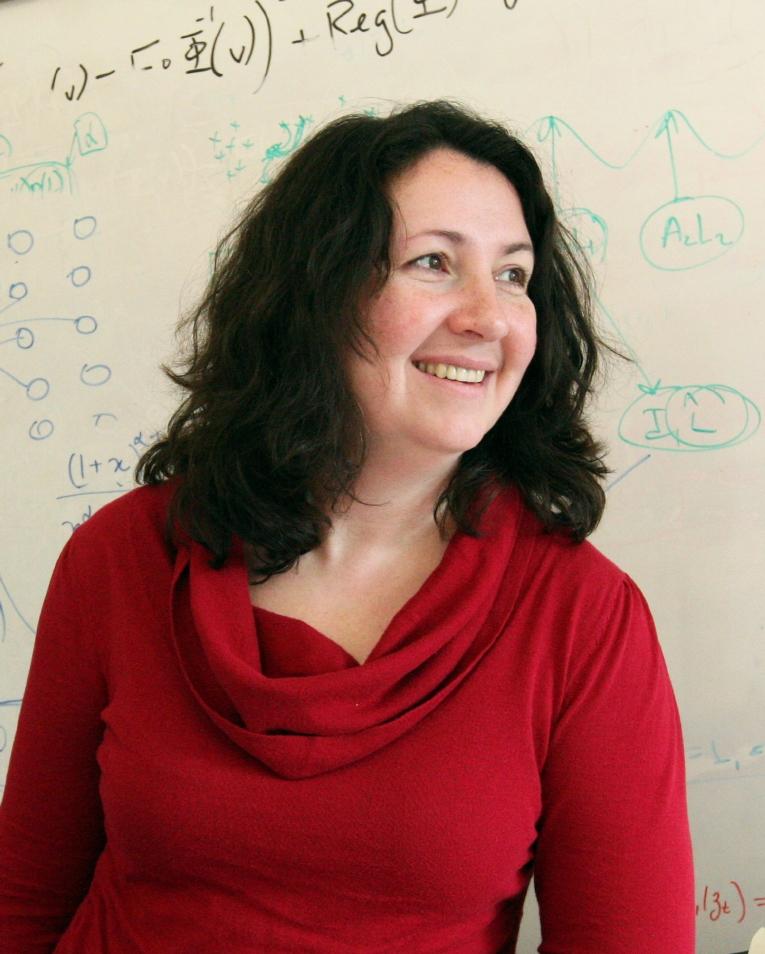
Julie Shah is the H.N. Slater Professor and Department Head of Aeronautics and Astronautics at MIT, co-leader of MIT’s Work of the Future Initiative, and director of the Interactive Robotics Group. Her research focuses on autonomous systems, human-robot collaboration, and AI planning, with applications in aerospace, healthcare, and manufacturing. Recognized by the NSF CAREER award and MIT Technology Review’s "35 Innovators Under 35," she has also received the IEEE RAS Academic Early Career Award. Prof. Shah holds S.B., S.M., and Ph.D. degrees from MIT and is co-author of What to Expect When You’re Expecting Robots.

See full profile
AI is transforming processes across countless disciplines—and the sciences are no exception. In this high-impact three-day course, you’ll master a range of practical AI skills—including predictive modeling, large language models, and AI-driven experiment planning—to streamline and enhance your scientific research and uncover new insights.
AI. Machine learning. GPTs. Data-driven technologies are revolutionizing industries and reshaping how we work and live. While the opportunities these tools offer are profound, so are the challenges—ethical risks that must be addressed to unlock AI’s full societal potential. In this timely, hands-on program, you’ll gain the advanced skills you need to develop and deploy AI systems in ways that are ethical, responsible, and beneficial for all.
AI is transforming processes across countless disciplines—and the sciences are no exception. In this high-impact three-day course, you’ll master a range of practical AI skills—including predictive modeling, large language models, and AI-driven experiment planning—to streamline and enhance your scientific research and uncover new insights.