



Why Tribology Matters More in the Age of Electric Cars
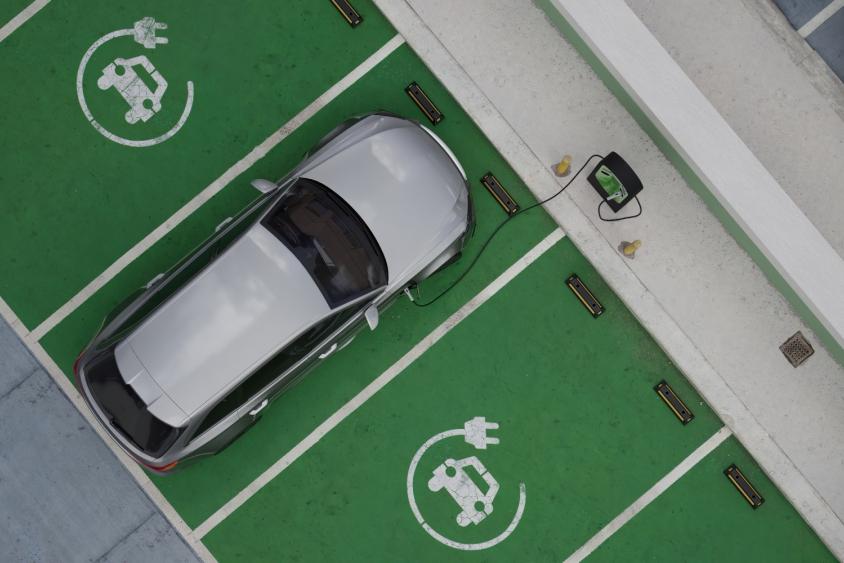
As electric vehicles and other advanced systems push performance boundaries, the fundamentals of friction, wear, and lubrication are becoming more consequential, not less.
For many technology leaders, tribology sounds like a niche engineering discipline. It is not. The science of friction, wear, and lubrication plays a central role in machine performance, how long they last, and how efficiently they run. As electric cars become more common, that science is becoming even more important.
In this Q&A, Said Jahanmir, a lead instructor for MIT Professional Education’s course, Tribology: Friction, Wear, Lubrication, and Design, explains why the field matters more today, what companies often get wrong when troubleshooting friction and wear problems, and why a stronger grounding in the fundamentals still matters.
For readers outside the field, what is tribology and why should they care?
Tribology is the study of friction, wear, lubrication, and interacting surfaces in motion. Any system with moving contact involves tribology. That includes bearings, gears, engines, manufacturing equipment, and even biological joints.
So while the term may sound specialized, the subject is not. If two surfaces move against each other, tribology will affect performance, durability, energy efficiency, and reliability. In that sense, it is everywhere.
Why does tribology feel especially relevant right now?
Because the systems we are designing are becoming more demanding. We want them to run faster, last longer, carry more load, waste less energy, and operate more reliably. At the same time, electrification is changing the environments in which many of these systems operate.
The important point is that the fundamentals do not change. What changes is the application. The science still begins with surfaces in contact, the conditions at that interface, and the way materials and lubricants behave. But those fundamentals now have to be applied to newer and more complex systems.
Electric vehicles are one of those newer systems. What changes from a tribology standpoint?
An electric vehicle creates a different environment from a conventional internal combustion system. You do not have the same components, and in some cases you also have electrical discharge taking place in bearings and motors. That means the demands on materials and lubricants are different.
You cannot simply assume that the same lubrication strategy or same design logic used in conventional vehicles will transfer directly. Electrification changes the conditions, and those conditions require careful attention if you want long-term reliability.
Are companies still working through those challenges?
Yes, and in many cases they have developed solutions. But the more important question is whether those solutions will continue to work as operating conditions change.
A very common pattern in industry is trial and error. A company has a problem, tries something, and finds a fix that appears to work. But often the team does not fully understand why it worked. Then the speed increases, the load changes, the temperature rises, or the duty cycle shifts, and suddenly the solution is no longer effective.
That is why a short-term fix is not the same as a real solution. If you do not understand the underlying physics and chemistry, you may solve the immediate issue without solving the actual problem.