



This course is also offered in a Live Online format, meeting simultaneously with the on-campus cohort.
AI for Materials Science
What would Artificial General Intelligence look like if its first breakthrough were not in language, but in the invention of matter? Join the frontier of superintelligence applied to agentic materials discovery. In this condensed four-day course, you will move beyond static design to master autonomous AI workflows. Through hands-on clinics, you will build multi-agent systems that do not merely predict material properties, but reason, plan, and invent next-generation smart materials - integrating large-scale computational modeling with generative AI to solve complex engineering challenges across scales, from atoms to systems, from concept to physical realization.
The course emphasizes autonomous, physically grounded discovery, teaching a clear path from idea to product.
This course may be taken individually or as part of the Professional Certificate Program in Design & Manufacturing or the Professional Certificate Program in Innovation & Technology.
AI-enabled materials innovation for engineering and manufacturing professionals
- Lead Scientists & R&D Engineers seeking to transition from traditional simulation to autonomous, agentic discovery pipelines for advanced materials.
- Software Engineers & Data Scientists entering the Deep Tech space who want to apply LLMs, GNNs, and reasoning models to solve physical-world problems.
- Deep Tech Founders & Investors (VCs) looking to identify high-growth opportunities in AI for Science, autonomous labs, and the next wave of materials startups.
- R&D Directors & CTOs tasked with modernizing their innovation strategy and making informed decisions about AI infrastructure and agentic workflows.
- Sustainability Directors leveraging AI to accelerate the discovery of bio-based, carbon-negative alternatives to current industrial materials.
- Technology Scouts & IP Professionals who need to evaluate the validity and commercial potential of emerging Generative AI technologies.
- Creatives & Science Communicators interested in bridging the gap between art and science through sonification, generative visualization, and novel design interfaces.
- Policymakers & Influencers assessing the economic and regulatory impact of autonomous scientific discovery across industries.
The course is additionally beneficial to anyone working in industries built on material interactions - such as pharmaceuticals, regenerative medicine, or clean energy - who is interested in moving beyond optimization to de novo design using the latest AI frameworks.
Requirements
A computer with internet access is advantageous for this course. Computing requirements will be taught using browser-based cloud computing accessible via laptops. No coding experience is needed (web-based tools will be used and web-based AI notebooks provided).
Participants will be expected to review a carefully curated collection of readings and videos in preparation for the course. These materials will help maximize your experience. You will also have the chance to complete a pre-course survey to help the instructors identify common interests and challenges participants want to solve in the machine learning clinic.
Testimonials
- Master Agentic Discovery: Go beyond using isolated tools to building autonomous AI workflows. In labs and clinics, you will:
- Orchestrate Multi-Agent Systems: Design AI architectures where "Scientist" and "Critic" agents collaborate to hypothesize, refine, and validate material concepts.
- Integrate Reasoning Models: Embed physics-based constraints into Large Reasoning Models to ensure AI-generated designs are scientifically viable.
- Bridge Scales: Connect atomistic simulations (Quantum/Molecular Dynamics) with macroscopic performance using Deep Learning surrogates.
- Invent with Generative AI: Move from predicting properties to generating novel solutions. Use Diffusion Models and Graph Neural Networks (GNNs) to invent microstructures that meet conflicting performance targets (such as high strength, toughness, and thermal conductivity) simultaneously.
- Execute "Bit-to-Atom" Workflows: Synthesize computationally designed hierarchical composites using multi-material 3D printing, closing the loop between digital hallucination and physical reality.
- Bio-Inspiration & Category Theory (a mathematical framework for abstracting transferable design principles across domains): Utilize category theory and bio-knowledge graphs to abstract the design principles of nature (e.g., spider silk, nacre) and transfer them into synthetic "designer proteins" and smart composites.
- Validate & Refine: Evaluate AI-generated designs through physical mechanical testing and feed the results back into your models to create self-improving discovery loops.
- Explore Fundamental Physics: Gain command of the underlying physics engines—molecular dynamics, coarse-graining, and failure analysis—that serve as the "ground truth" for training robust AI systems.
- Solve Real-World Challenges: Receive direct feedback on your specific industry problems during the hands-on Clinic, applying agentic frameworks to your own data and use cases.
Participants will receive clear templates, code notebooks, frameworks, agent architectures, and datasets.
This course runs 8:00 am – 5:00 pm each day. There is a networking reception on the evening of the first day.
Day 1
- Basic methods and applications in computational materials science
- Introduction to AI, AI for science, and machine learning methods
- Machine learning clinic: First steps and model training
- Participant reception and networking
Day 2
- 3D printing lab
- Step-by-step in-class design studio
- Additive manufacturing of multi-material optimized materials
- Molecular modeling and first principles simulation, design, and data visualization lab
- Interactive case studies and participant presentations
- Physics-informed machine learning; graph neural networks and geometric deep learning
- Physics-ML bridging: Neural Operators (FNO/DeepONet) for real-time simulation
- Optional group work time
Day 3
- Advanced multiscale modeling methods
- Advanced machine learning methods (featuring Foundation Models for science, Neural Operators (FNOs), code-writing agents, and Large Reasoning Models (LRMs), and other emerging technologies)
- Machine learning clinic (part I) and hands-on learning exercises: Fine-tuning a reasoning model with tool calling, agent design
- Interactive design (VR/AR, data visualization) and materials processing lab
- Active Learning algorithms for optimal experimental design and uncertainty quantification
- Tool-using Agents: Teaching AI to write and execute Python scripts for simulation and analysis
- Optional group work time
Day 4
- The Thermodynamics of Creativity: Understanding the trade-off between "exploration" (novelty) and "exploitation" (optimization) in generative design (and how to tune your agents to be "creative" rather than just derivative).
- Experimental data collection, high-throughput approaches, and dataset curation
- Category theory model demonstration and bio-transfer using graph theory/ontological graphs
- Teamwork group labs and assignment presentation
- Computational-experimental methods (cloud computing, neural modeling, Bayesian process optimization)
- Course review and certificate ceremony
Links and Resources
Video/Audio:
- Superintelligence for Scientific Discovery (https://www.youtube.com/watch?v=EMZDtilmX2k)
- Generative AI and Its Business Impact
- Engineered Spider Silk - Taking Cues from Biological Materials
- Examining Failure to Test Limits of Materials Function
- Materials Simulation Through Computation and Predictive Models
- Using Computation to Validate Predictability of Materials Models
News/Articles:
- Impossible Materials (https://www.linkedin.com/pulse/impossible-materials-markus-j-buehler-dnuaf/?trackingId=r6okiIESqh3duo7i2H3Npw%3D%3D)
- Small Worlds Yield Big Ideas (https://www.linkedin.com/pulse/small-worlds-yield-big-ideas-markus-j-buehler-ix12e/?trackingId=lRN1UIsCT6iwovvno8wpNw%3D%3D)
- How Generative AI Is Transforming Materials Design
- As Professor Markus Buehler explains, Generative AI is fundamentally changing materials design, not only making materials scientists faster but giving them capabilities they've never had before.
- Six keys to generative AI success
- Generative artificial intelligence is upending our previous assumptions about how — and how quickly — new materials can be designed, with algorithms already helping companies and researchers to automate performance forecasting, improve existing materials, and even generate arrays of potential designs for new materials that meet specific criteria.
- What Industry Can Learn from Nature About Product Design
- In their quest to make materials stronger and more sustainable, designers should look to the lessons offered by spiderwebs and seashells.
- MIT Materials Scientist Markus J. Buehler on Nanotech, Machine Learning, and Professional Education
- MassTLC spoke with Professor Buehler about the machine learning course, what advances in materials research mean for sustainable design, and why professional education matters.
- School of Engineering third quarter 2021 awards
- Markus Buehler of the Department of Civil and Environmental Engineering won the Daniel C. Drucker Medal on June 21.
- Considering the spiderweb
- After nearly a decade, an interdisciplinary collaboration to model a 3D spider web leads to many surprising results.
- A material difference
- Finding the love hormone in a stressed-out world
- A new art/science collaboration uses molecular structures as its creative medium.
- There’s a symphony in the antibody protein the body makes to neutralize the coronavirus
- Professor Markus Buehler composed it, and a South Korean orchestra performed it; it’s the latest in a series of artistic collaborations sparked by Buehler’s exploration of the structure of SARS-CoV-2.
- New AI tool calculates materials’ stress and strain based on photos
- Between spider webs, 3D printing, geckos and AI - a week at MIT's online campus
- 2020 course participant reflects on his experience
- Marshaling artificial intelligence in the fight against Covid-19
- The MIT-IBM Watson AI Lab is funding 10 research projects aimed at addressing the health and economic consequences of the pandemic.
- Translating proteins into music, and back
- By turning molecular structures into sounds, researchers gain insight into protein structures and create new variations.
- How AI and 3D Printing are Revolutionizing Materials Design
- How to build better silk
- Reconstituted silk can be several times stronger than the natural fiber and made in different forms
- Conch shells spill the secret to their toughness
- Three-tiered structure of these impact-resistant shells could inspire better helmets, body armor.
- Jell-O jawed marine worm inspires MIT-developed material
- Researchers design one of the strongest, lightest materials known
- Porous, 3-D forms of graphene developed at MIT can be 10 times as strong as steel but much lighter
- How to power up graphene implants without frying cells
- New analysis finds way to safely conduct heat from graphene to biological tissues
- Finding a new formula for concrete
- Researchers look to bones and shells as blueprints for stronger, more durable concrete.
- MIT Professor Merges Biology And Materials Through Biomateriomics
- Just hanging on: Why mussels are so good at it
- Understanding the strength of the shellfish’s underwater attachments could enable better glues and biomedical interfaces.
- Printing artificial bone
- Researchers develop method to design synthetic materials and quickly turn the design into reality using computer optimization and 3-D printing.
- Decoding the structure of bone
- MIT researchers decipher the molecular basis of bone’s remarkable strength and resiliency; work could lead to new treatments and materials.
- The music of the silks
- Researchers synthesize a new kind of silk fiber — and find that music can help fine-tune the material’s properties.
- Seeing the music in nature
- From spider webs to tangled proteins, Markus Buehler finds the connections between mathematics, molecules, and materials.
- Envisioning Silk Stronger Than Steel
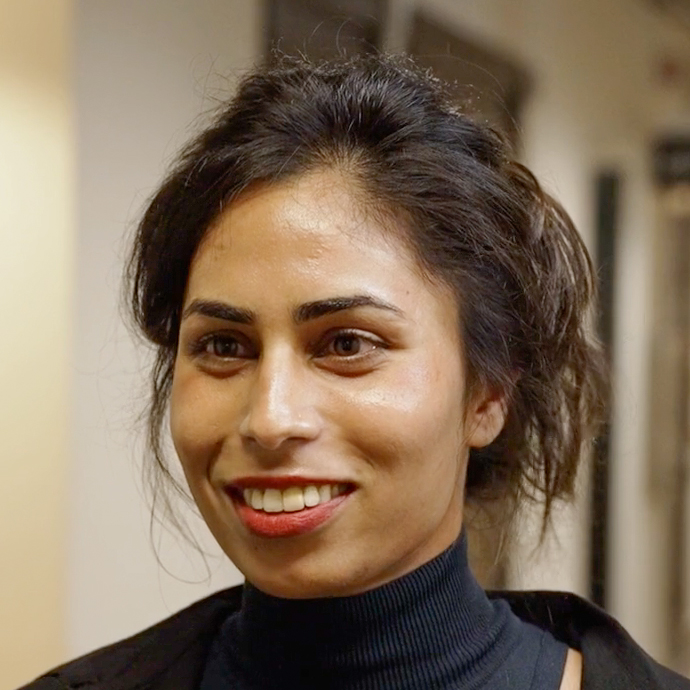
“Markus Buehler is nothing but supportive, attentive, and patient with the class. I’ve learned so much about artificial intelligence and machine learning.”
- Reddhy Mahle
The type of content you will learn in this course, whether it's a foundational understanding of the subject, the hottest trends and developments in the field, or suggested practical applications for industry.
How the course is taught, from traditional classroom lectures and riveting discussions to group projects to engaging and interactive simulations and exercises with your peers.
What level of expertise and familiarity the material in this course assumes you have. The greater the amount of introductory material taught in the course, the less you will need to be familiar with when you attend.